
Materials
TRV Corp engineers and manufactures components using a wide range of advanced materials, including high-performance metals, ceramics, and polymers.
Materials That Meet the Mission
TRV Corp engineers precision components from an elite portfolio of advanced materials—each selected and certified for performance in the world’s most demanding environments.
High Purity Refractory Metals
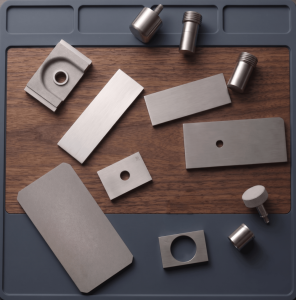
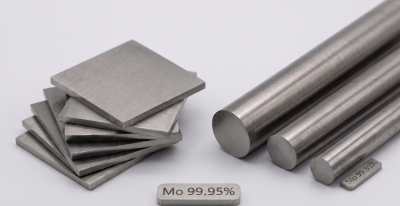
The foundation of ion implantation excellence. At ≥99.95% purity, our tungsten, molybdenum, and tantalum eliminate metallic contamination risks that degrade beam stability, compromise doping accuracy, and shorten maintenance intervals. When wafer yield depends on atomic-scale precision, TRV materials deliver the purity that protects your process.
Why 99.95% Purity Refractory Materials Matter in Ion Implantation
Ion implantation operates at the boundary of materials science, where dopant doses are measured in ions per square centimeter and contamination tolerance is counted in parts per billion. In this environment, refractory materials—tungsten, molybdenum, tantalum, and their alloys—serve as structural workhorses in the ion source, beamline, and target chamber. Yet their very presence introduces a paradox: these high-temperature, wear-resistant components must not compromise the purity of the implant process they enable.
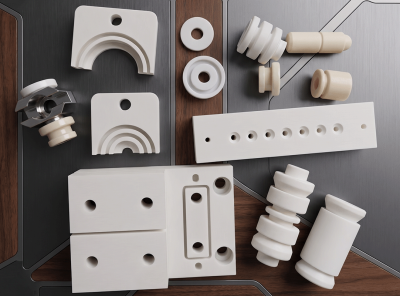
High Purity Ceramics for Ion Implantation and PVD process
Our high purity ceramics are specifically designed to meet the exacting demands of semiconductor ion implantation and PVD equipment.
Why Our Material?
- Ultra-Low Metallic Impurities: Our purity grade minimizes contamination risks, ensuring process integrity and higher wafer yields.
- Superior Electrical Insulation: Engineered for high-voltage environments, our ceramic material delivers reliable dielectric performance to prevent arcing and maintain beam stability.
- Thermal & Mechanical Resilience: Withstands intense localized heating and thermal cycling while maintaining dimensional stability for precise wafer positioning.
- Chemical Durability: Resists corrosion from process gases and cleaning chemistries, extending component service life.
TRV CORP. POST MACHINING PURIFICATION (PMP): A UNIQUE ADVANTAGE.
Why Ultra-Pure Graphite Matters
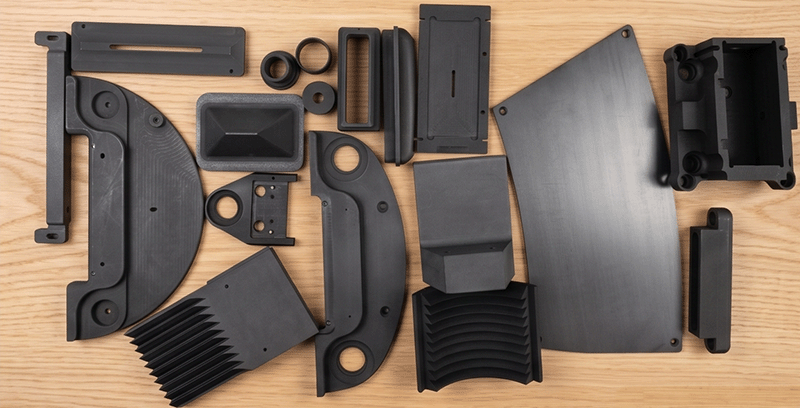
Graphite components in ion implanters (beam apertures, electrodes, shields, wafer handling parts) must achieve parts-per-billion (PPB) purity levels. Any metallic impurities (Fe, Ni, Cu, Al, Na) in the graphite can:
- Sputter into the ion beam, contaminating wafers
- Create unwanted doping species during high-temperature operation
- Cause arcing or electrical instability in electrostatic components
Graphite Purification Method
- High-Temperature Halogen Purification
- The industry-standard method for achieving semiconductor-grade graphite.
| Parameter | Specification |
| Temperature | 2,000°C |
| Atmosphere | Chlorine (Cl₂) or Halogenated gases (CF₄, SF₆) |
| Mechanism | Metal impurities form volatile chlorides/fluorides and outgas |
| Purity achieved | <5 ppm total ash content, <1 ppm individual metals |
| Result | 99.999%+ carbon purity |
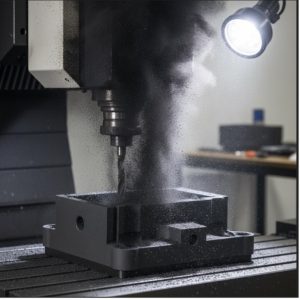
PMP refers to the purification of our graphite components, which is performed post machining. This process allows us to achieve the highest level of purity in industry. During the fabrication of graphite components, micron, and Sub-micron metal particles, emanating from the cutting tools are impregnated in the part. Ultrasonic cleaning is inadequate for the removal of fused contaminates accumulated during the machining process. By applying the purification process post machining, TRV can confidently certify a 99.999+% purity for its graphite components.
Another variable that increases the degree of contamination in purified graphite components, is the higher porosity level of the material due to the purification process. Higher porosity is more conducive to the absorption of various contaminates. Consequently, these contaminates will be carried by the plasma beam.
Finally, the level of contamination rises proportionately to the hardness of the purified graphite being machined. This is because a greater quantity of particulates is deposited on the part because of a greater erosion of the machining tool.